

In March, I flew to Juneau to meet with my elected representatives about reforming the outdated Alaska State mining tax laws to help address the State’s beleaguered budget. The so-called “Fly-in,” which is one of those uniquely Alaskan terms describing how constituents travel to the only state capitol in the union that does not have any roads leading to it, was sponsored by the Alaska Mining Impact Network, a statewide coalition of conservation organizations and Alaska Native communities focusing on mining issues.
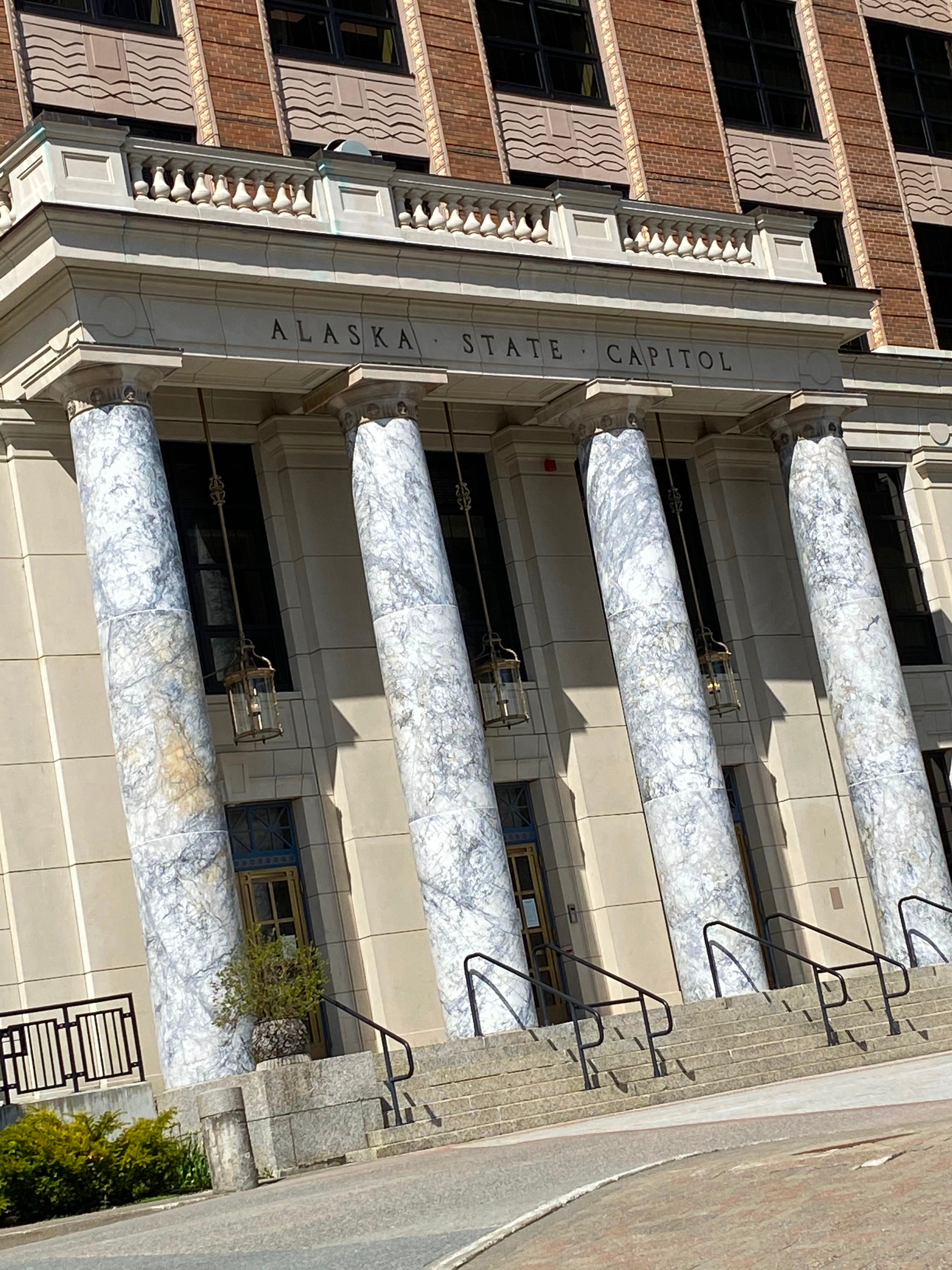
The primary purpose of the fly-in was to educate lawmakers about the need for the State’s mining industry to begin paying its fair share of the environmental and economic costs of mining to help relieve Alaska’s growing budget crisis. The state’s current tax structure was drafted in 1913, long before statehood, and has not been updated since 1955, when the government was attempting to incentivize a mining industry composed of individual prospectors and small mines – a foregone era that crafted mining policy that is completely politically, economically, and technologically incompatible with the present day.
According to a report commissioned by the Alaska Conservation Fund and prepared by AKWA-DC, LLC, “[t]oday, when Alaska’s large-scale hardrock mining industry is controlled by multinational, multibillion-dollar corporations, this tax structure is woefully out of date.”[1] As if huge profits from pulling minerals out of the ground weren’t enough to incentivize mining corporations, they are also taking advantage of a host of subsidies under the Alaska Minerals License Tax. Operators, for example, are still taxed on royalties on the operator’s net rather than gross income, meaning that deductions can reduce this tax burden to almost nothing, particularly in the more remote regions of the state where operating expenses can be high.
In addition, large mining projects often funnel profits out of the state, contravening Alaska’s Constitution, which requires that the state’s natural resources be developed for the maximum use consistent with the public interest and rural communities, which often see none of the benefits of these projects while being the most likely to be impacted by mining development, including catastrophic mining spill events.
Finally, there are the environmental costs. According to the Report, these include the “potential impacts from large mining projects on other Alaska industries—chief among them fishing, subsistence, and tourism—could be catastrophic, and the state cannot bear the economic burden of any resulting industry crash” and “[r]eclamation estimates are chronically lower than the costs necessary to restore habitat, often resulting in additional costs passed on to the taxpayer.”[2]
With Alaska on the verge of economic collapse, the “state is risking heavily investing in an industry with a net negative economic and environmental impact….”[3]
Another reason to reform Alaska’s mining taxation is a lack of oversight and outright corruption at the federal level.
The Trump administration is not only making it easier for the extraction industry to avoid paying royalties that compensate taxpayers for polluting public lands and waters but also implementing taxpayer-funded investments to prop up mining companies themselves. Under Trump’s second term, his administration has gone even further than abusive public land management practices to satisfy extraction interests by breaking with traditional Republican orthodoxy and making direct taxpayer-financed investments in private mining companies. This snapping up of stakes in mining and minerals processing companies, federal interventions include an $8.9 billion purchase of Intel Corp stock, a $400 million investment in rare earths miner MP Materials, with more to come. Because such investments are political, they are naturally taking place without congressional approval at an extraordinary pace, raising important ethical, governance, and environmental concerns.
These largely under-the-radar policies take place without public disclosure and focus on highly speculative companies with little transparency into how they are chosen. Combined with lax regulation and weak oversight, this lack of visibility paves the way for resource exploitation and unprecedented profits for major mining corporations.
Department of Interior Secretary Doug Burgum, for example, recently issued permits for the mining industry’s long-sought-after Ambler Road that would cross 200 miles of pristine Alaska wilderness and subsistence use areas. Canadian mining company Trilogy Metals not only benefits from the controversial project in order to gain access to copper-rich projects in the Ambler Mining District, but it also made about $8.7 million in profit by exercising stock options during the immediate share price spike after the October 6 announcement that the Pentagon would purchase nearly $36 million in company stock. This sent the company’s shares above $10 per share, up from 57 cents before Trump’s election.
Meanwhile, the impacts of mining industry favoritism on subsistence-based communities are increasing. Emily Murray, a traditional elder living in the Native Village of Elim and President of the Norton Bay Watershed Council, said in a recent Letter to the Editor in the Nome Nugget:
Our fresh, clean water will begin to become contaminated with chemicals when mining begins. Clean water not only allows our wild greens & berries to grow, but sustains the fish & animals we live on. As seen around the world, indigenous people are being dispossessed of their land by mining on or near their traditional lands. Mining companies promise they will ‘repair’ the water even better than they found it. Habitats can & will be destroyed by extensive mining. Young people who study science know that you cannot ‘repair’ clean water. They know that minute bugs exist only in clean, healthy rivers & streams.
Can the Alaska State legislature step in to fill in the chasm of mining regulatory reform so badly needed to reverse the regulatory rollbacks and corruption at the federal level? Maybe. Of all places, our Ruby red state, which has a MAGA in the Governor’s office, also has the distinction of being the only state in the country to use ranked-choice voting. This process ensures candidates are elected by a majority of voters rather than the closed primary system, which allows a small minority to elect fringe candidates with extreme ideologies. In part due to Alaska’s voting process, we also have the distinction of being the only state with a bipartisan coalition in both houses of the legislature.
Does this mean there is hope for mining tax reform in Alaska? We’ll see when Mr. Shepherd returns to Juneau during next year’s legislative season when a bill to reform the state’s mining tax laws will be introduced.
[1] Hardrock Mining Taxation in Alaska, A Historical, Economic, and Political Analysis, Executive Summary (December 2025)(Mining Taxation in Alaska).
[2]Ibid.
[3]Ibid.